
Mirra has captivated the hearts and minds of many throughout history, particularly within the context of the Bible. This aromatic resin, derived from the Commiphora tree, holds significant cultural and spiritual importance in ancient texts. Often associated with healing and purification, mirra played a vital role in religious rituals and practices.
In biblical accounts, mirra is mentioned as one of the gifts presented to the infant Jesus by the Magi, symbolizing His future suffering and sacrifice. Its multifaceted uses, from incense to medicine, reveal its value in both everyday life and sacred traditions. Exploring what mirra represents in the Bible offers insights into its profound impact on spirituality and its enduring legacy in religious practices today.
What Is Myrrh in the Bible?
Myrrh, a fragrant resin derived from the Commiphora tree, holds a significant place in biblical texts. It appears multiple times throughout the scriptures, primarily symbolizing holiness, suffering, and sacrifice.
Myrrh served various purposes in ancient rituals. It was used in anointing oils, signifying consecration and divine blessing, as seen in Exodus 30:23-25. Additionally, it acted as an essential ingredient in incense offerings, which emphasized its sacred nature.
The most notable mention of myrrh in the New Testament occurs in Matthew 2:11. The Magi presented myrrh to Jesus alongside gold and frankincense, highlighting its symbolic representation of His future suffering and mortality. This gift underscores the prophetic nature of Christ’s mission on Earth.
Historically, myrrh also found application in medicinal practices. Ancient cultures utilized it for its antiseptic and anti-inflammatory properties, often applying it to wounds and using it in burial customs. This aspect links myrrh to themes of healing and preservation, reinforcing its role in spiritual and physical realms.
Through its uses in religious rituals and its symbolic meanings, myrrh continues to resonate in spiritual traditions. The resin’s legacy endures, serving as a reminder of its sacred significance in biblical history.
Historical Significance of Myrrh
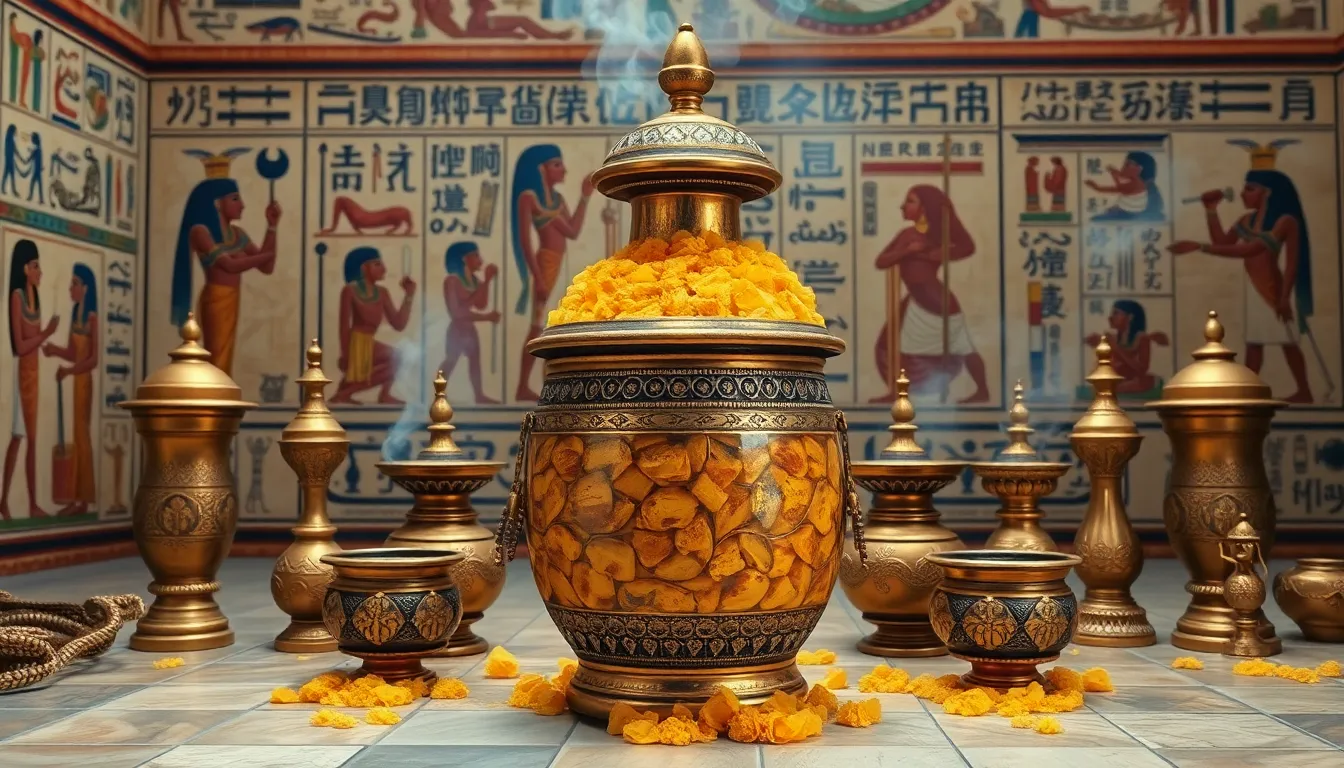
Myrrh holds considerable historical significance, particularly in religious and cultural contexts. Its applications in ancient times reveal the depth of its value beyond mere aromatic qualities.
Uses in Ancient Times
Myrrh served various essential purposes in ancient civilizations. It functioned as an ingredient in religious rituals, often included in incense offerings. Ancient Egyptians utilized myrrh in embalming practices to preserve the deceased, reflecting its critical role in funerary traditions. Additionally, it appeared in cosmetics, enhancing beauty and hygiene. Myrrh also held a position in medicinal systems, where it was applied for its antiseptic and anti-inflammatory properties.
Cultural Importance
Culturally, myrrh symbolized depth and reverence in multiple societies. In biblical contexts, it represented sacrifice and suffering, particularly during the Nativity, where it was presented to Jesus by the Magi. This association elevated myrrh as a sacred element in Christian traditions and fostered its integration into various liturgical practices. Its presence in texts throughout history signifies its enduring significance in spiritual rituals, connecting generations with ancient beliefs. Myrrh’s rich cultural legacy reflects themes of holiness, healing, and divine blessing, maintaining its relevance in contemporary spiritual practices.
Myrrh in Biblical Texts
Myrrh appears prominently throughout biblical texts, signifying layers of meaning in both the Old and New Testaments. Its uses range from sacred rituals to medicinal applications, reflecting its multifaceted significance.
References in the Old Testament
In the Old Testament, myrrh is highlighted in Exodus 30:23 as a key ingredient in the holy anointing oil, blending with sweet cinnamon, calamus, and olive oil. This mixture served to consecrate priests and objects for sacred use. Myrrh is also mentioned in Proverbs 7:17, used as a fragrance in love poetry, illustrating its cultural importance. Furthermore, the Song of Solomon (4:6) references myrrh as a symbol of desire and beauty, enhancing its association with intimacy and affection. These instances showcase myrrh’s role in both spiritual and personal contexts.
References in the New Testament
The New Testament features myrrh prominently, particularly in Matthew 2:11, where the Magi present it as a gift to the newborn Jesus, symbolizing His future suffering and sacrifice. Additionally, myrrh appears in Mark 15:23 when Jesus is offered wine mixed with myrrh before crucifixion—a gesture intended to dull pain, emphasizing His impending suffering. The use of myrrh in these contexts reinforces its symbolic meaning of mortality and sacrifice, deepening its significance within the Christian narrative.
Symbolism of Myrrh
Myrrh embodies profound symbolism in biblical texts, connecting themes of sacrifice, healing, and reverence. Its historical significance as both a gift and a ritualistic element solidifies its place in spiritual traditions.
Myrrh as a Gift
Myrrh’s appearance as a gift from the Magi in Matthew 2:11 carries deep symbolic weight. By presenting myrrh to Jesus, the Magi acknowledged His future suffering and mortality. This gift highlighted myrrh’s association with sacrifice and foreshadowed the trials He would endure. Myrrh’s inclusion among gold and frankincense elevates its status, emphasizing its role in honoring a divine figure and reinforcing its significance in Christian tradition.
Spiritual Significance
Myrrh’s spiritual significance extends beyond its physical properties. It represents healing and purification throughout biblical texts. Used in anointing oils, myrrh signifies consecration and divine blessing, marking individuals and objects as sacred. Myrrh’s antiseptic qualities in ancient medicinal practices connect it to themes of restoration and well-being. This multifaceted role cements myrrh’s place as a symbol of both the physical and spiritual journey within religious contexts.
Myrrh’s rich history and profound symbolism resonate deeply within biblical narratives. Its multifaceted role in religious rituals underscores its significance in both ancient and modern spiritual practices. The connections between myrrh and themes of sacrifice healing and reverence continue to inspire faith and reflection.
As a gift to Jesus from the Magi myrrh represents not just a physical offering but a profound acknowledgment of His life’s journey. Its enduring presence in sacred texts and rituals highlights the timeless relevance of this aromatic resin. Myrrh remains a powerful symbol linking past traditions with contemporary spiritual beliefs enriching the understanding of faith and devotion.


