
In today’s fast-paced economy, understanding currency exchange rates is crucial, especially for those involved in international trade or travel. The black market for currency exchange often presents rates that differ significantly from official figures. For many Nigerians, knowing the current rate of one dollar to naira in the black market can mean the difference between a profitable transaction and a financial loss.
As the naira continues to fluctuate against the dollar, individuals and businesses alike are keen on staying informed about these rates. This article delves into the latest trends and factors influencing the black market exchange rate, providing insights that can help navigate the complexities of currency trading in Nigeria. Whether you’re looking to send money abroad or simply curious about the market, understanding these dynamics is essential.
Current Exchange Rate Overview
The current exchange rate for one dollar to naira in the black market reflects significant deviations from the official rate. As of today, the black market rate stands at approximately 1,300 naira per dollar. This discrepancy highlights economic pressures in Nigeria, driven by factors such as inflation and fluctuations in oil prices.
Recent trends show that the naira has experienced increased volatility, with rates varying daily. Historical data indicates that the exchange rate has seen shifts of up to 100 naira within a single week. This situation underscores the necessity for individuals and businesses to monitor real-time rates closely.
Market dynamics reveal that demand for foreign currency remains high. Investors seek dollars for international trade, leading to pressure on local currency values. Consequently, many individuals resort to black market transactions, despite associated risks.
Additionally, regulatory changes can influence exchange rates. Past interventions by the Central Bank of Nigeria aimed at controlling the naira’s value have resulted in temporary fluctuations, impacting both official and black market rates. Maintaining awareness of these developments can assist traders and travelers in making informed decisions.
Factors Influencing Black Market Rates
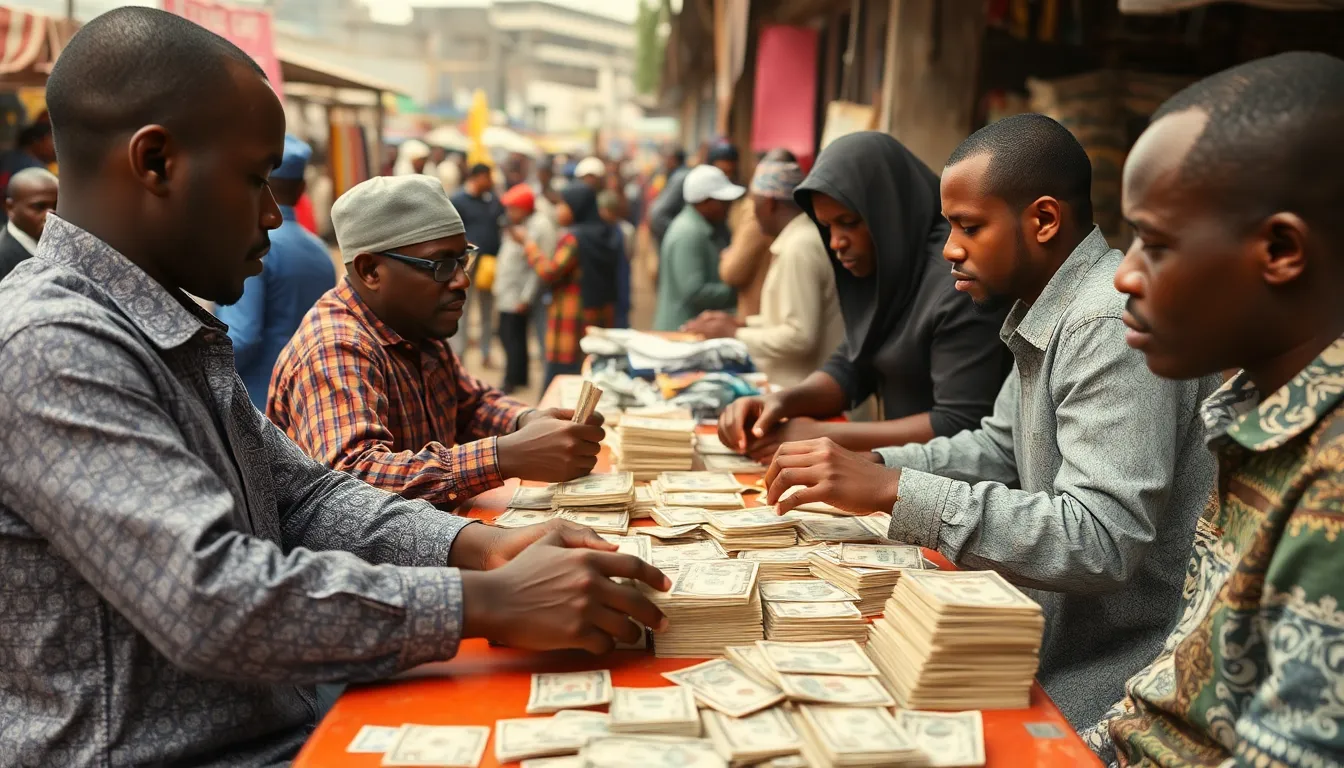
Several elements impact the black market exchange rate for the naira against the dollar. Understanding these factors helps in making informed decisions regarding currency transactions.
Economic Conditions
Economic conditions exert substantial influence on the black market rate. Inflation rates in Nigeria affect purchasing power and currency value. Increased inflation often leads to a depreciation of the naira, making foreign currency more expensive on the black market. Additionally, fluctuations in oil prices affect Nigeria’s revenue since oil exports significantly contribute to the economy. When oil prices drop, foreign exchange reserves decrease, heightening the demand for dollars and pushing black market rates higher. Unemployment rates can also play a role; higher unemployment can lead to reduced consumer spending and overall economic instability, impacting currency dynamics.
Speculation and Demand
Speculation drives much of the black market activity. Traders and investors speculate on future economic trends, buying and selling dollars based on anticipated exchange rate movements. When individuals expect the naira to weaken, they tend to purchase dollars, boosting demand. This demand, combined with limited supply, significantly raises black market rates. Furthermore, demand peaks during certain seasons, such as festive periods or before major events, as individuals may need more foreign currency. Speculative activities create cycles of volatility, leading to daily fluctuations in the black market rate.
Comparison to Official Rates
The current official exchange rate for the naira against the dollar is approximately 467 naira per dollar. This stark contrast with the black market rate of around 1,300 naira per dollar signifies a discrepancy of over 800 naira. These variations arise from several economic factors, including inflation trends and oil price fluctuations, which greatly impact the naira’s value.
| Aspect | Official Rate (₦/$) | Black Market Rate (₦/$) | Discrepancy (₦) |
|---|---|---|---|
| Exchange Rate | 467 | 1,300 | 833 |
Individuals and businesses commonly engage in black market transactions due to the need for immediate access to foreign currency. This practice often occurs despite the added risks involved. Regulatory adjustments by the Central Bank of Nigeria lead to fluctuations in the official rate, occasionally causing temporary spikes or dips.
Speculation significantly influences black market rates. Traders often anticipate shifts in economic conditions, increasing demand for dollars which drives up the black market rates. Festive seasons amplify this demand, resulting in notable rate increases during peak times. Overall, understanding the differences between black market and official rates is essential for anyone navigating the currency exchange landscape in Nigeria.
Trends in the Black Market
The black market for currency exchange in Nigeria exhibits significant trends shaped by economic conditions and market behaviors. Analyzing historical data and future predictions helps stakeholders navigate this complex landscape effectively.
Historical Data
Historical data highlights the fluctuating nature of the naira against the dollar in the black market. Over the past year, the rate spiked from approximately 500 naira per dollar to around 1,300 naira, reflecting a 160% increase. Events such as political instability and oil price fluctuations have historically impacted exchange rates, causing sudden hikes. For instance, during the first quarter of 2023, the naira experienced a sharp depreciation due to heightened inflation, reaching an all-time high of 1,350 naira per dollar. Such trends underscore the correlation between economic events and black market behavior, necessitating continuous monitoring for accurate forecasting.
Future Predictions
Future predictions for the black market exchange rate suggest continued volatility. Economic analysts forecast that the naira may fluctuate within the range of 1,250 to 1,500 naira per dollar over the next year. Factors contributing to this volatility include ongoing inflation, changes in oil prices, and investor sentiment. If the Central Bank of Nigeria implements further regulatory changes, the black market rate might experience temporary adjustments, intensifying short-term speculations. Stakeholders in international trade should prepare for potential spikes in demand during holiday seasons, impacting exchange rates. Keeping track of these developments remains vital for informed decision-making in currency transactions.
Implications for Consumers and Businesses
Consumers and businesses face significant challenges due to the current black market exchange rate of approximately 1,300 naira per dollar. This rate significantly differs from the official rate of around 467 naira per dollar, creating essential implications for financial decision-making.
Impact on Purchasing Power
Consumers experience reduced purchasing power as the naira weakens against the dollar. Imported goods, ranging from electronics to essential items, become costlier, affecting household budgets. Price adjustments for imported goods typically follow black market fluctuations, leading to higher retail prices.
Effect on Businesses
Businesses dealing with international suppliers encounter increased operational costs due to disparities in exchange rates. The high black market rate may lead to increased prices for raw materials, affecting profitability. Additionally, firms unable to access foreign currency at official rates may be forced to seek alternative funding sources, raising their exposure to financial risk.
Price Volatility and Financial Planning
Price volatility in the black market complicates financial planning. Companies must account for fluctuating exchange rates in their budgets. This unpredictability may lead to hesitancy in making long-term investments or contractual agreements, as businesses might not accurately forecast costs.
Risk of Fraud and Scams
The black market also poses risks of fraud and scams. Consumers and businesses engaging in unofficial currency transactions increase their exposure to potential losses. It’s crucial to exercise caution and verify the credibility of exchange partners to mitigate these risks.
Competitive Disadvantages
Small businesses without access to favorable exchange rates may struggle, unable to compete with larger firms that can absorb costs more effectively. This disparity can lead to market consolidation, where only larger players survive, reducing competition and choice for consumers.
Adaptation Strategies
To cope with these challenges, consumers and businesses should adopt adaptive strategies, such as diversifying suppliers or seeking hedging options to offset currency risks. Staying informed about market trends and fluctuations can provide a competitive edge in navigating the volatile exchange rate landscape.
Understanding the implications of the current black market exchange rate empowers consumers and businesses to make informed decisions in a challenging economic environment.
The current state of the naira against the dollar in Nigeria’s black market underscores the complexities of currency exchange. With significant disparities between official and black market rates, individuals and businesses must navigate a challenging landscape. The fluctuations driven by economic conditions and seasonal demand highlight the need for vigilance and adaptability.
As the naira’s value continues to shift, staying informed is paramount for anyone involved in international trade or travel. Understanding these dynamics can help mitigate risks and enhance decision-making. Ultimately, being aware of the black market’s impact on purchasing power and operational costs is crucial for effectively managing finances in this volatile environment.


