
Imagine stepping into a kitchen that feels like a well-orchestrated symphony, where every pot and pan knows its place. A functional kitchen layout does just that—it transforms chaos into culinary harmony. Whether you’re a gourmet chef or someone who just burns toast, the right design can elevate cooking from a chore to a delightful experience.
Understanding Functional Kitchen Layout
A functional kitchen layout enhances both usability and enjoyment during cooking. Key design principles support the creation of an efficient space.
Key Principles of Kitchen Design
Effective kitchen design revolves around several key principles. Triangle layout maximizes space by positioning the stove, sink, and refrigerator in a triangular formation, minimizing movement. Adequate counter space enables food preparation and multitasking. Storage solutions must fit the kitchen’s design, ensuring easy access to tools and ingredients. Lighting plays a crucial role, brightening work areas while adding ambiance. Lastly, ergonomics contribute to comfort, ensuring users can navigate without strain.
Importance of Workflow Efficiency
Efficiency in kitchen workflow saves time and enhances cooking experiences. A well-organized kitchen reduces steps between tasks, allowing for quicker meal preparation. Zoning areas for cooking, prepping, and cleaning streamlines activities. Integrating frequently used appliances within easy reach further improves convenience. Flexibility in workspace arrangements accommodates various cooking styles, catering to both casual and serious chefs. Prioritizing workflow simplifies daily activities, making kitchen use more enjoyable.
Types of Functional Kitchen Layouts
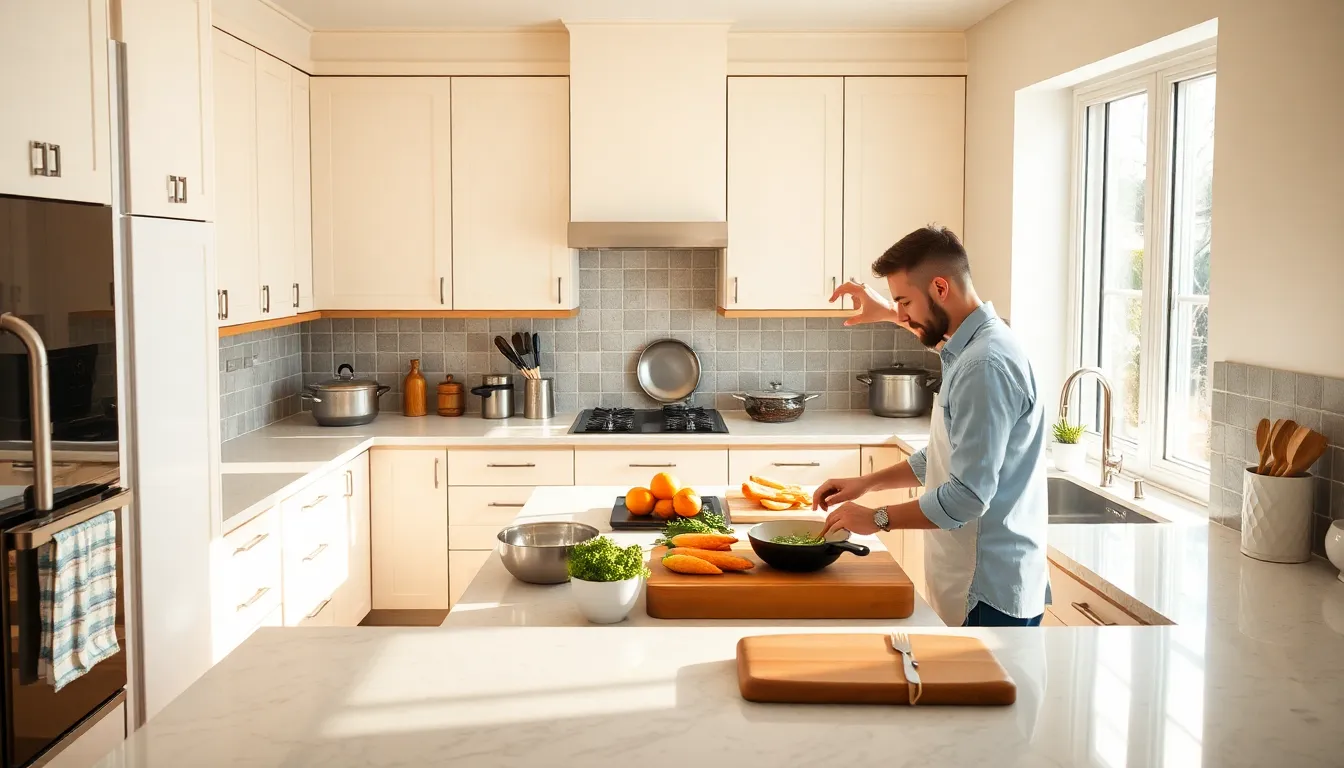
Various kitchen layouts enhance functionality and efficiency. Each layout serves specific cooking styles and space requirements.
U-Shape Kitchen
The U-shape kitchen features three walls of cabinetry and appliances. This layout creates a highly efficient workspace, promoting movement between areas. Ample countertop space allows for food preparation and cooking. Storage options remain plentiful, accommodating kitchen tools and supplies. It suits larger spaces and provides room for multiple cooks.
L-Shape Kitchen
The L-shape kitchen utilizes two adjoining walls, forming an L shape. This setup maximizes corner space, improving accessibility to storage and appliances. The open layout encourages social interaction during cooking. Countertops extend along the walls, offering sufficient workspace for food preparation. Ideal for smaller homes, this layout allows for easy flow between cooking and dining areas.
Galley Kitchen
The galley kitchen consists of two parallel countertops and cabinets. This design ensures a functional workspace with efficient access to the stove, sink, and refrigerator. Narrow layouts minimize distance between food preparation and cooking areas. They work well in smaller homes or apartments where space is limited. This design can enhance organization with built-in storage solutions.
Island Kitchen
The island kitchen includes a central island, enhancing workspace and storage. The island serves as a focal point for cooking and entertaining. Additional seating may generate more interaction during meal preparation. This layout allows for a flexible cooking environment while keeping essential appliances within reach. Ideal for open-concept homes, it encourages movement and communication among family members.
Factors Influencing Kitchen Layout
Several factors influence kitchen layout, each playing a crucial role in optimizing functionality and aesthetics.
Size and Shape of the Space
The kitchen’s dimensions significantly impact design choices. Compact areas may benefit from L-shape or galley layouts, maximizing efficiency in limited space. Open-concept homes allow for island kitchens, providing ample workspace. Considerations for doorways and traffic flow also determine layouts. Adequate space between elements ensures ease of movement, essential for a functional design. Planning for potential future expansions can offer flexibility in design.
Cooking Habits and Lifestyle
Cooking frequency and style dictate kitchen requirements. Home chefs who enjoy baking may need extensive counter space and specialized appliances. Casual cooks often prioritize a simple setup, focusing on essential tools. The presence of multiple cooks in the household influences layout choices. Thus, creating zones for preparation, cooking, and cleaning can enhance collaborative cooking experiences. Understanding how the kitchen fits daily routines helps in crafting a space tailored to specific lifestyle needs.
Storage Needs and Features
Storage requirements vary based on cooking habits and family size. A larger family typically demands more cabinetry and pantry space for organization. Open shelving allows easy access for frequently used items. Countertop appliances require designated spots, ensuring they don’t clutter workspace. Integrated storage solutions, such as pull-out cabinets or built-in organizers, enhance functionality. Thoughtful storage planning ensures everything has its place, promoting a tidy and efficient kitchen environment.
Tips for Designing a Functional Kitchen
Designing a functional kitchen requires careful planning to ensure efficiency and usability. Implementing certain strategies can significantly enhance both the functionality and aesthetics of the space.
Maximizing Space Utilization
Maximized space utilization involves creative storage solutions that transform every corner of the kitchen into functional areas. Incorporating pull-out cabinets and dividers helps access items without cluttering countertops. Opting for vertical storage solutions, like wall-mounted shelves and hanging pot racks, expands available space. Adjustable shelving units can adapt to various storage needs. When designing, consider a pantry area to store dry goods, which keeps the main cooking area organized.
Incorporating Modern Appliances
Modern appliances play a vital role in a functional kitchen layout. Energy-efficient models minimize utility costs while enhancing cooking efficiency. Smart appliances, equipped with connectivity features, offer convenience and functionality for daily tasks. When selecting appliances, prioritize those that fit seamlessly into the design, ensuring that they do not disrupt workflow. Built-in appliances save space, making them an ideal choice for smaller kitchens. Additionally, look for versatile appliances that fulfill multiple functions, such as an oven with an air-frying option.
Enhancing Aesthetic Appeal
Aesthetics contribute significantly to the kitchen’s overall vibe. Choosing cohesive color schemes creates a harmonious look. Incorporating natural materials, like wood or stone, adds warmth and character. Stylish fixtures, such as faucets and cabinet handles, elevate the visual appeal. Integrating open shelving for display items enhances both functionality and beauty, allowing personal touches throughout the kitchen. Consider strategic lighting design, which not only highlights aesthetic elements but also improves task visibility in key areas.
A functional kitchen layout is essential for creating an efficient and enjoyable cooking environment. By prioritizing design principles like the work triangle and effective zoning, homeowners can ensure their kitchens cater to diverse cooking styles and needs. Thoughtful planning around storage and workspace not only enhances functionality but also elevates the overall aesthetic appeal.
Incorporating modern appliances and smart technology further streamlines daily tasks, making meal preparation a breeze. Ultimately, a well-organized kitchen not only supports culinary creativity but also fosters a welcoming space for family and friends to gather, turning cooking into a shared experience.


