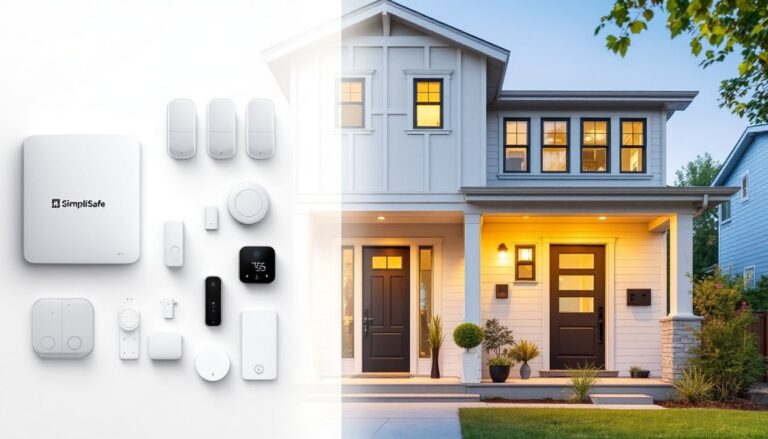
If you’re shopping for a home security system, you’ve likely landed on SimpliSafe and Vivint as top contenders. Both offer wireless, customizable protection that doesn’t require a professional installer, a big draw for homeowners tired of rigid contracts and high upfront costs. But they’re built differently, priced differently, and cater to slightly different needs. SimpliSafe leans toward the budget-conscious DIYer who wants straightforward monitoring and quick setup. Vivint positions itself as the full-service smart home ecosystem play, bundling security with automation, cameras, and professional installation. This guide cuts through the marketing to help you figure out which actually fits your home and your wallet.
Table of Contents
ToggleKey Takeaways
- SimpliSafe vs Vivint comes down to priorities: SimpliSafe offers DIY flexibility and lower costs with no contracts, while Vivint provides professional installation and integrated smart home automation at a premium price.
- SimpliSafe’s plug-and-play setup takes under an hour with no wiring required, making it ideal for renters and frequent movers, while Vivint’s technician installation takes longer but handles complex integration and wired systems.
- SimpliSafe typically costs $700–$1,200 over three years with transparent, contract-free pricing, whereas Vivint’s 3–5 year contracts run $1,200–$2,500 total with potential early termination fees.
- SimpliSafe excels at modularity and third-party integration with Alexa and Google Home, while Vivint bundles security, smart locks, thermostats, and cameras on one proprietary platform for seamless automation.
- Choose SimpliSafe if you value low monthly costs and flexibility; choose Vivint if you own your home long-term and want a unified smart home ecosystem with professional support.
- Check your home’s Wi-Fi coverage and door/window count before deciding: weak Wi-Fi favors Vivint’s wired reliability, while numerous entry points scale better with SimpliSafe’s modular pricing.
Overview And Key Differences
SimpliSafe and Vivint approach home security from different angles. SimpliSafe is a DIY-first company founded in 2006: it sells equipment directly to customers and relies on self-installation. You buy the hardware, download the app, connect it to your Wi-Fi, and monitor it yourself or add professional monitoring for a monthly fee. Vivint, founded in 1999, historically offered professional installation and full-service contracts, though it’s loosened that model recently.
The core difference: SimpliSafe gives you control and flexibility at a lower entry cost. Vivint bundles security, smart home automation, and professional installation into a comprehensive package, which costs more upfront but can handle more complexity. SimpliSafe is modular: you start small and add sensors as needed. Vivint often requires a technician to set up your system, though it means everything talks to the same brain. If you want plug-and-play simplicity, SimpliSafe wins. If you want someone to do the legwork and integrate your entire home, Vivint appeals to a different buyer.
Ease Of Installation And Setup
SimpliSafe’s big selling point is installation. Pull the equipment out of the box, peel off the adhesive backing, stick sensors on your doors and windows, power on the base station, and pair everything in the app. No wiring, no drilling, no second person required, though you’ll want to plan where your sensors go beforehand. The app guides you through adding each device. Most people get a working system in under an hour. Since there’s no hardwiring, you’re also free to take it with you if you move.
Vivint sends a technician to install your system. They’ll assess your home, run wiring if necessary, mount equipment professionally, and test everything before they leave. This takes longer, usually a few hours, but it’s hands-off for you. The trade-off: you’re committed to a longer contract and can’t easily move or modify the system without calling them. If your home has routing challenges or you want the security system wired into your electrical panel, Vivint handles that. SimpliSafe relies on Wi-Fi and battery backup, which works fine for most homes but can be unreliable if your internet drops or you have thick walls.
Pricing, Contracts, And Monitoring Plans
SimpliSafe’s pricing is transparent and flexible. A basic starter kit (hub, door/window sensors, motion detector) runs around $200–$300. Professional monitoring costs $15–$30 per month, depending on your plan tier and whether you prepay annually. There’s no contract: you can cancel anytime. If you want additional sensors or a camera, you buy them as add-ons. Over three years, a SimpliSafe setup with professional monitoring typically costs $700–$1,200 total.
Vivint requires professional installation and a contract, usually 3 to 5 years. Your upfront cost is lower or even free, they waive installation fees to hook you, but your monthly bill runs $30–$60 depending on what you bundle (security alone or security + smart home + video). Over a three-year contract, you’re looking at $1,200–$2,500 total. Early termination fees can be steep. If you cancel within the contract term, you may owe hundreds of dollars. SimpliSafe undercuts Vivint on total cost of ownership, especially if you want to keep your options open. Vivint’s model works if you stay put and want an integrated ecosystem.
Features And Smart Home Integration
SimpliSafe covers the security basics well. You get door and window sensors, motion detection, a siren, a keypad, and app-based arming and disarming. Add-on cameras are available but priced separately. The system integrates with Amazon Alexa and Google Home, so you can arm/disarm with voice commands. Automation is light, you can set up simple rules like “arm when the last person leaves”, but SimpliSafe isn’t trying to be your smart home hub. It does security and does it competently.
Vivint bundles security with smart home control. Beyond the standard sensors, you get smart locks, thermostats, cameras, and garage door openers all on the same platform. A technician wires everything together, so it’s cohesive. If you want your lights to turn on when your alarm is disarmed, or your thermostat to adjust when you arrive home, Vivint handles that natively without third-party integrations. Many customers appreciate this unified approach. But, Vivint’s ecosystem is proprietary: you’re buying into their specific brands and services, which can limit flexibility if you prefer certain devices. SimpliSafe’s strength is modularity and third-party compatibility: Vivint’s is seamless integration but at the cost of choice.
Customer Support And Reliability
SimpliSafe’s customer support is phone and email based, available during business hours and extended into evenings. Response times are generally good, and the community forum is active. Because the system is less complex, fewer integrations, fewer custom configurations, there’s less to go wrong. The main failure point is Wi-Fi: if your internet drops, local alarm backup still works, but monitoring goes dark until service returns. Many users report the app is intuitive and rarely crashes. Battery backups on sensors last several years, so failures are uncommon.
Vivint’s advantage is having a technician on record. If something breaks, Vivint troubleshoots it and can dispatch someone to fix it, often under warranty. The downside: you’re dependent on their service schedule. Support is available 24/7 because Vivint’s monitoring center operates around the clock. Many Vivint customers praise proactive support and quick dispatches. But, user reviews occasionally mention billing surprises and difficulty canceling. SimpliSafe’s model is more transparent and puts the onus on you to maintain the system, which appeals to hands-on homeowners. Vivint’s full-service approach trades autonomy for convenience and accountability.
Which System Is Best For Your Home
Choose SimpliSafe if you’re a renter, you move frequently, you like DIY projects, or you want to keep monthly costs low. It’s also ideal if you want flexibility in hardware choices and don’t mind managing the system yourself. Renters especially benefit because SimpliSafe doesn’t require mounting or wiring: you can remove it without damage. If you already have a preferred smart home ecosystem (Alexa, Google Home, Apple), SimpliSafe integrates smoothly.
Choose Vivint if you own your home long-term, you want a unified smart home platform from day one, or you prefer having a technician handle everything. It’s a good fit if you’re not tech-savvy and want someone to troubleshoot issues. Vivint also makes sense if you’re planning to invest in multiple smart devices, cameras, locks, thermostats, and want them all managed from one app and one bill.
Do a quick site survey before deciding. Check your Wi-Fi strength in key areas (entry points, bedrooms). If you have dead zones or an unreliable router, Vivint’s wired option is more robust. Count your doors and windows: SimpliSafe pricing scales gracefully, while Vivint quotes a fixed package. Call both companies for pricing, Vivint’s quotes vary widely by region and what you bundle. Recent DIY security system comparisons favor SimpliSafe for flexibility and cost, though Vivint wins for all-in-one convenience. Articles from CNET and Digital Trends also review both systems in depth if you want more detailed teardowns.
Conclusion
SimpliSafe and Vivint both protect your home effectively, but they serve different priorities. SimpliSafe is the practical, affordable choice for homeowners who want control and flexibility without contracts. Vivint is the premium, integrated choice for those who value professional installation and unified smart home management. Evaluate your home’s layout, your budget, and how long you plan to stay. Either choice beats leaving your home unprotected.